
Linen has a way of teaching patience. It arrives a little stiff, a little formal, and softens only through use — through washing, wearing, and the slow business of everyday life. Caring for it well is less a chore than a small ritual, one that rewards you with a fabric that keeps getting better for years. Here is everything worth knowing about washing, drying, and storing linen, so it can do what it does best.

Why Linen Asks for a Different Kind of Care
Linen comes from the flax plant, and its fibres are longer and stronger than cotton’s, which is part of why it lasts for years rather than seasons. That same strength is what lets it be washed again and again without losing its integrity. What it does ask for is gentleness at the edges — the right temperature, the right rhythm — and in return it grows softer, more supple, more itself with every wash.

Washing Linen: By Hand or by Machine
- Wash in cool to warm water, up to 40°C / 104°F — enough to lift most stains without troubling the fibre. If a piece is deep or hand-dyed, keep to the cooler end of that range to help the colour stay rich for longer.
- Use a gentle or delicate machine cycle, or wash by hand if the piece is embellished or especially loose-woven.
- Choose a mild, plant-based detergent without bleach or optical brighteners.
- Wash similar colours together, and turn printed or dyed pieces inside out.
- Skip the fabric softener — linen softens on its own, and softener coats the fibres rather than easing them.
A small note on our own fabric: every Pure Vibe piece is cut from linen that has already been washed once, at a higher temperature, before it ever becomes a garment — this lets it shrink and settle in advance, and clears away any dust or residue left from storage. So the cloth that reaches you is already clean and pre-shrunk, which is also why a warm wash at home will not catch you by surprise.

Drying Linen the Right Way
Air is linen’s best friend. Shake the garment out while it’s still damp, smooth the seams and hems with your hands, and let it dry on a hanger or a flat rack rather than in a tumble dryer. Direct, blazing sun can fade colour over time, so a shaded spot with a good breeze is ideal. If a dryer is the only option, use the lowest heat setting and take the piece out while it’s still slightly damp — overdrying is what makes linen feel brittle rather than soft.

To Iron, or to Let It Be
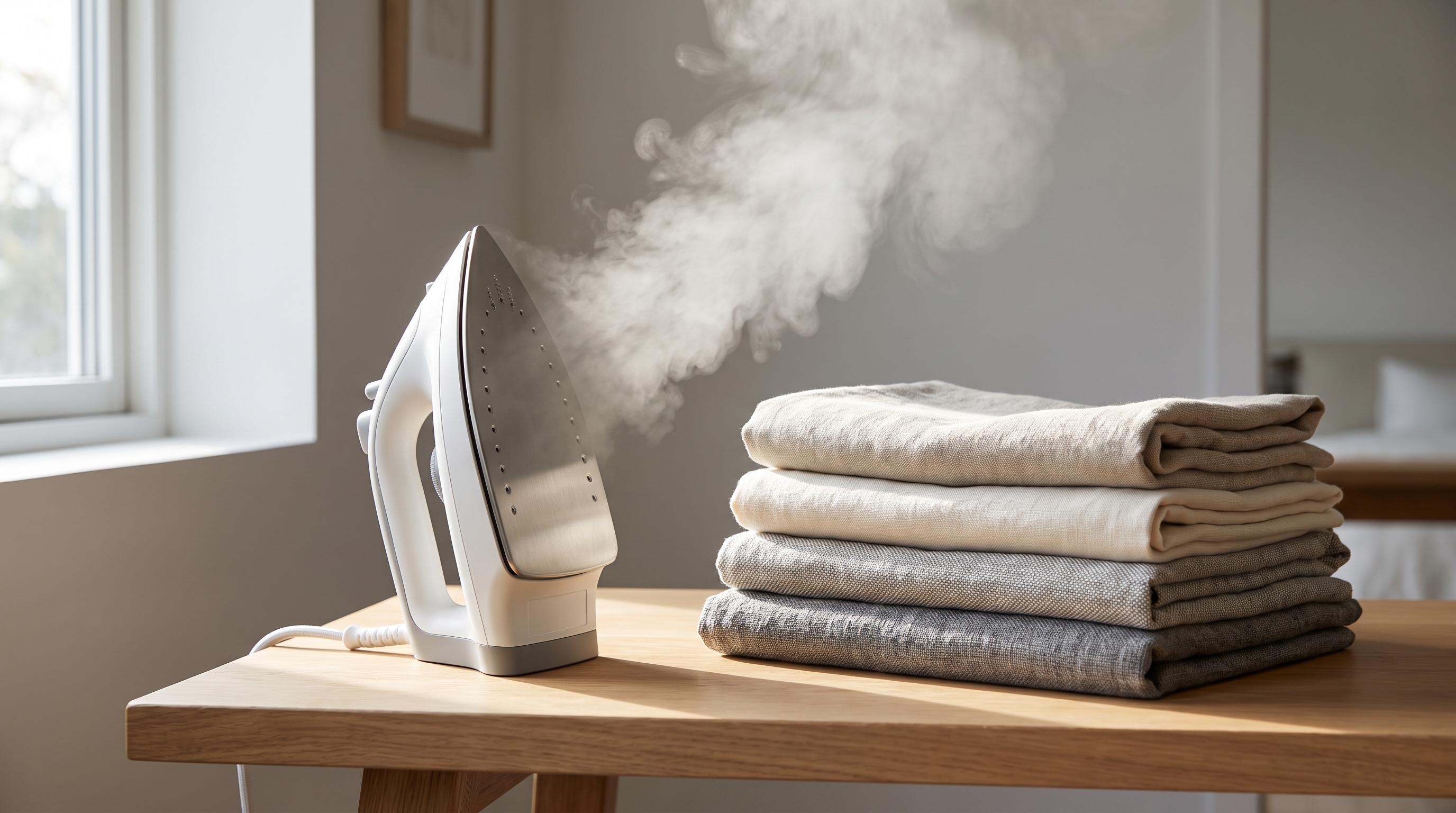
Linen’s creases are part of its character, not a flaw to erase. If you’d like a smoother finish, iron while the fabric is still a little damp, using a medium-to-high heat with steam, and press on the reverse side to protect any print or dye. But there’s also a case for leaving it be: a naturally rumpled linen piece has an ease to it that no amount of pressing improves — especially somewhere warm, where a relaxed hem often reads better than a crisp one.
Storing Linen Garments Between Wearings
Linen “likes to breathe” even when not being worn, so it is best to store such garments hanging up rather than folded. Use wide hangers with rounded shoulders (wooden or padded — never thin wire ones); this helps prevent creases that could otherwise set into the fabric over time, especially in high humidity. If you do need to fold a garment (for travel, for example), fold it loosely and place tissue paper along the fold to soften it; for long-term storage, change the fold line occasionally. In any case, avoid airtight plastic covers that trap moisture, and opt instead for breathable cotton or linen garment bags.

None of this is complicated, and that’s rather the point. Linen doesn’t ask to be treated delicately so much as attentively — a little care, repeated often, is what lets it soften into the kind of piece you reach for without thinking, year after year.